
 Skip to content
 Over thirty years ago, I read a little book called Vitamin E for Ailing and Healthy Hearts, by the Shute brothers. It’s still a good read.
The brothers, who were Canadian medical doctors, presented the case for vitamin E supplements. I began taking vitamin E and researching the usefulness of vitamins, minerals, herbs, and special foods in the treatment of health problems.
As I learned, a number of these substances are helpful to anyone interested in optimizing their health, while others are appropriate for people who develop various health problems typical of our culture. The question is really not whether to take supplements. Rather, the questions are which ones, when, and how much.
These are hard questions, and because the answers are different for each of us and depend on individual needs, they can’t be fully answered here. However, some general information can help us make informed decisions. In this article, I’ll address the sources, types, and effectiveness of various nutritional supplements, as well as the relationships between these supplements and whole foods.
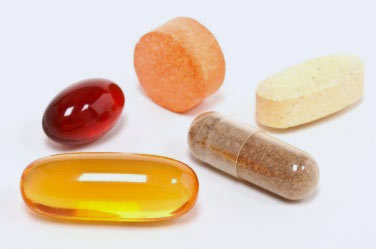 One of the significant factors in choosing a supplement is the source of the nutrients it contains. Vitamins, for example, may either be extracted from foods or synthesized in biochemical or biological processes. It can sometimes be challenging to determine the source from reading the product label. In some cases, vitamins made in laboratories may be labeled “natural” because they are made from “natural” precursors. Moreover, these synthesized vitamins may not be biochemically identical to their counterparts in nature.
When selecting fat-soluble vitamins, it is important to choose ones that come from natural sources, such as vitamin E derived from vegetable oil. Vitamins A and D are found in fish oils. A number of synthetic forms of vitamins A and D are frequently used in supplements, and these should be strictly avoided. An example is vitamin D2, or irradiated ergosterol, which is produced by irradiation of primary grown yeast with ultraviolet light. It is added to a variety of foods, as well as vitamin supplements, particularly those formulated without the use of animal products. Irradiated ergosterol has significant biological differences from vitamin D3, which is produced in the body when ultraviolet light strikes the skin and is also richly supplied in fish oils, milk fats from animals feeding on fresh greens, and liver. Vitamin D3 may also be naturally derived from lamb’s wool.
Relatively small amounts of the synthetic forms of fat soluble vitamins may be toxic, and this toxicity has contributed to the media frenzy about the dangers of vitamins A and D. Unfortunately, both the mainstream media and the medical establishment fail to distinguish between the synthetic forms and natural vitamins A and D as found in or derived from animal fats. Decades ago, researchers definitively established the benefits and safety of reasonable doses of natural vitamins A and D. The synthetic versions appear to cause the same problems the natural vitamins can cause in excessive doses, but can do so when taken in much smaller amounts. Traditional diets are rich in these nutrients and typically contain upwards of ten times the Recommended Dietary Allowances (RDA) the government now tells us are adequate. Natural vitamins A and D are beneficial, and are particularly important for pregnant women. In fact, foods rich in these vitamins were emphasized in virtually all of the traditional cultures studied by Dr. Weston A. Price.
Vitamin E is another nutrient for which it is very important to select the proper form. Synthetic vitamin E, labeled “dl-alpha,” is biochemically different from natural vitamin E, labeled “d-alpha.” Like synthetic vitamin D, synthetic vitamin E has detrimental effects. It is incompletely metabolized in the body and may even disrupt the metabolism of natural vitamin E in the liver. The most beneficial natural vitamin E products come as mixtures of the alpha, beta, gamma, and delta tocopherol fractions. I use and recommend a mixed tocopherols product that, although extracted from soybean oil, is purified through distillation to be completely free of all traces of soy.
Although fat-soluble vitamins should always come from natural sources, this is not strictly the case for water-soluble ones. There are natural sources that can provide small amounts of water-soluble vitamins for general use—acerola powder for vitamin C, for example, and low-temperature-dried yeast flakes grown on an appropriate medium for B complex. However, for larger therapeutic doses, it is necessary to use synthetic vitamins. How these vitamins are formulated makes a big difference in how well they are absorbed and tolerated.
Almost all of the vitamin C in supplements is made in a laboratory, despite labeling that implies otherwise. For example, the label might say “ascorbic acid from sago palm.” In this case, dextrose, a form of sugar that contains no vitamin C, is extracted from sago palm and used as the base molecular material for a complex laboratory process that synthesizes the vitamin. In another instance, the label might say”vitamin C derived from the finest natural sources.” This could be true, but the vitamin C is still likely to have been synthesized. The label might also say “wtih rose hips and acerola,” which would mean that these substances are used as the base material for the tablet or capsule. However, a tablet of rose hips or acerola can contain only about 40 mg of truly natural vitamin C; the rest is synthesized.
Another significant factor pertaining to vitamin C is whether it is buffered. This process complexes
a mineral (typically calcium, magnesium, or potassium) with ascorbic acid. Buffered vitamin C is gentler on the stomach than regular vitamin C, which because of its acidity often causes gas, bloating, and upset stomach. Buffered C offers superior absorption, as well.
As with vitamin C, the labeling of B vitamins may be misleading. Labels often proclaim that the products contain “natural” B vitamins derived from yeast. However, manufacturers almost always add laboratory-synthesized B vitamins (with the exception of B12, which may be chemically refined from bacteria) to the food fed to the yeast during its growth, and then fortify the yeast with additional synthetic B vitamins once it has grown. This allows for the production of yeast at any B-vitamin potency desired. Ammonia is also generally added to the growth medium of the yeast, just as it is used in chemical farming—as a nitrogen fertilizer to increase protein content in the product. The only truly natural B-vitamin supplements are desiccated liver, and yeast grown without the addition of B vitamins.
Unlike vitamins, which are organic compounds, minerals are elements and as such cannot be synthesized; whatever the source, calcium is calcium. However, the way in which minerals are biochemically arranged with other molecules is of considerable importance. In both foods and supplements, minerals exist as complexes with other substances, and the substances with which they are complexed affect the degree to which they are absorbed and utilized. Some mineral supplements are extracted from foods (for example, calcium hydroxyapatite), while others are complexed in the laboratory (for example, amino acid complexes of calcium) or found in nature (for example, calcium carbonate). Those extracted from foods are ideal.
Calcium is the most commonly used mineral supplement, and it is available in many different forms. However, only one is a food extract—calcium hydroxyapatite, the form of calcium that naturally occurs in bone. In manufacturing this type of calcium supplement, low-temperature processing techniques are used to extract microcrystalline hydroxyapatite concentrate (MCHC) from raw bovine bone. MCHC is a complex crystalline compound composed of calcium, phosphorous, delicate organic factors (thus the importance of low-temperature processing), protein matrix, and the full spectrum of minerals that naturally comprise healthy bone. Look for a calcium supplement in which the only source of calcium is MCHC. Many supplements say “MCHC” or “calcium hydroxyapatite” on the label, but when you read the ingredients carefully, you discover that a secondary source, typically dicalcium phosphate—an inexpensive, poorly absorbed form of calcium—contributes an unstated percentage of the calcium.
Many calcium formulas include magnesium, the most efficiently absorbed forms of which include magnesium taurate, magnesium glycinate, and magnesium citrate. Magnesium oxide is somewhat less absorbable, but it has a much smaller molecular size than many other forms of magnesium and so is frequently used because it is much easier to fit in a capsule.
Understanding the labeling of vitamin and mineral supplements can also be a bit tricky in another way. In order to make informed decisions regarding specific products it is important to understand some of the differences between USP grade (or USP purity) supplements and three categories of “food vitamins”—food-based supplements, food form supplements, and food concentrates.
How potent a given supplement will be depends both on what forms the nutrients are in and how much of the product is actually absorbed and utilized. Forms identical or close to those found in foods are generally better absorbed and utilized.
There are two issues relating to purity. The first is whether the raw materials are pure. Reputable manufacturers insure that each batch of raw materials is laboratory tested for purity, and they can provide users with copies of certificates of analysis. The other issue concerns the additives nearly all manufacturers use in the production of supplements.
The vast majority of supplements contain stearates, manufacturing agents used as lubricants to speed up production. Most capsules and tablets are made by “jobbers” in mass production plants, which churn out a multitude of formulas for various companies. Magnesium stearate and stearic acid are added to the raw materials so that production machinery will run at maximum speeds.
Tablets may also contain potentially allergenic binders, fillers, and coloring agents. They must be coated with shellac (an insect resin, usually listed in the ingredients as “natural glaze”) or vegetable coating (derived from corn, to which many people are sensitive). Potentially allergenic fillers such as lactose are used to top off capsules.
These additives have a number of effects, including decreased absorption. In a study published inPharmaceutical Technologyin April 1986, the percent dissolution for capsules after 20 minutes in solution went from 90 percent without stearates to 25 percent with stearates. Another problem is allergic reaction, for even small amounts of additives may cause reactions in sensitive individuals. This is a major reason why so many people have adverse reactions to supplements or fail to receive the significant benefits pure supplements can offer. For these reasons, I recommend that, when possible, people use additive-free supplements.
I have mentioned a number of special foods, such as cod liver oil and sea vegetables. These foods are used in small amounts to supplement many of the nutrients discussed in this article. A number of herbs and food-derived supplements belong in the special foods category, along with freeze-dried organs and glands. These essential traditional foods are useful in even the best diets.
Individual products available include liver,heart,brain,thymus,kidney,pancreas,adrenal,spleen,ovary, and testicleliver,heart,brain,thymus,kidney,pancreas,adrenal,spleen,ovary, and testicle,and there are various multi-gland combinations. In some products, freshly harvested organs and glands are freeze-dried at 40 to 60 degrees below zero (Fahrenheit). Freeze-drying tissues preserves the unaltered proteins, the enzymes, and the fat-soluble activators so important in traditional diets. For the best products, tissues are taken only from grassfed animals raised without the use of pesticides, hormones or antibiotics.
These nutrients are components of cartilage and are supplied in traditional diets by gristle and bone broths. Supplementation may be helpful; numerous studies have shown that damaged cartilage had been significantly repaired after only three months. A combination product providing both nutrients is ideal.
The potency of herbal supplements depends on the quality and potency of the raw herb used, the care taken in manufacturing, and the concentration of the finished product. A tremendously wide range of quality is found in different products. A poor quality product may have no effect whatsoever, while the same dosage of a superior one may be very effective.
Please realize that the quality and potency of herbal extracts, as well as correct dosing, are of critical importance in achieving good results.
 Hawthorn has historically been a key herb in the support of heart and cardiovascular health.
Double-blind studies by teams of European medical doctors over the past twenty years have demonstrated dramatic benefits from the use of properly prepared and dosed hawthorn extract, as well as from berberine extracted from the herb goldenseal.
Milk thistle regenerates liver cells and helps protect us from chemicals and toxins to which we all are exposed. Milk thistle dramatically enhances liver health by protecting the outer membrane of liver cells and acting as a powerful antioxidant. It can help reverse the liver damage caused by toxins.
Dandelion, too, has a marked benefit on the liver, and it acts as a cleansing agent for the entire system. Dandelion used in sufficient quantity is also an effective diuretic.
 Whole foods have always formed the core of my approach to health. In the early 1970s, I belonged to one of the first food co-ops in western Massachusetts. From there, I went on to naturopathic medical school, believing that if I learned enough about how food affects people, I could help them recover from most medical problems. That turned out to be even truer than I realized, once I discovered the work of Dr. Price and other pioneers of nutritional therapy.
My studies and my years in practice have shown me that certain high-quality nutritional supplements can play a critical role in optimizing health and longevity. Properly understood, these nutrients, herbs, concentrates, special foods, and extracts complement even the best diets.
If the diet is less than optimal, relief occurring through vitamin and mineral supplementation alone will be incomplete. An individual may achieve marked relief from particular symptoms, but unless the diet is corrected, other imbalances will soon occur, and with them, other problems. Supplements are always best used in conjunction with proper diet. A deeper and more lasting healing occurs when recovery is based on providing multiple factors present in proper foods rather than a particular substance the body is obviously lacking.
Our knowledge about the body’s needs is growing rapidly, and just as we embrace the wonderful health-giving qualities of traditional whole foods, we should also embrace the best of what modern science has given us. Although we must be cautious of marketing campaigns that claim every new supplement is a magical elixir, scientists and clinicians have clearly demonstrated the efficacy of a wide range of these products. The challenge and realistic goal is to separate the wheat from the chaff and apply this knowledge so we can live healthier, happier, and longer lives.